
Running a Sex Offender Check in Craighead County
The primary source is the Arkansas Sex Offender Registry, also described as the Arkansas Sex Offender Notification System and managed by ACIC. It supports searches by address, city, county, ZIP code, place, and name where available. For Craighead County, county and city filters help narrow results around Jonesboro, Brookland, Bono, Lake City, and other local places.
Craighead County Sheriff also publishes a local sex offender list and disclaimer. That list is useful as a local layer, but it is not the statewide source of record. The sheriff warns that the local list is not complete and that addresses may be wrong because offender reporting can be improper or out of date.
The Craighead County sheriff disclaimer page is the first local warning to read before using the county list.
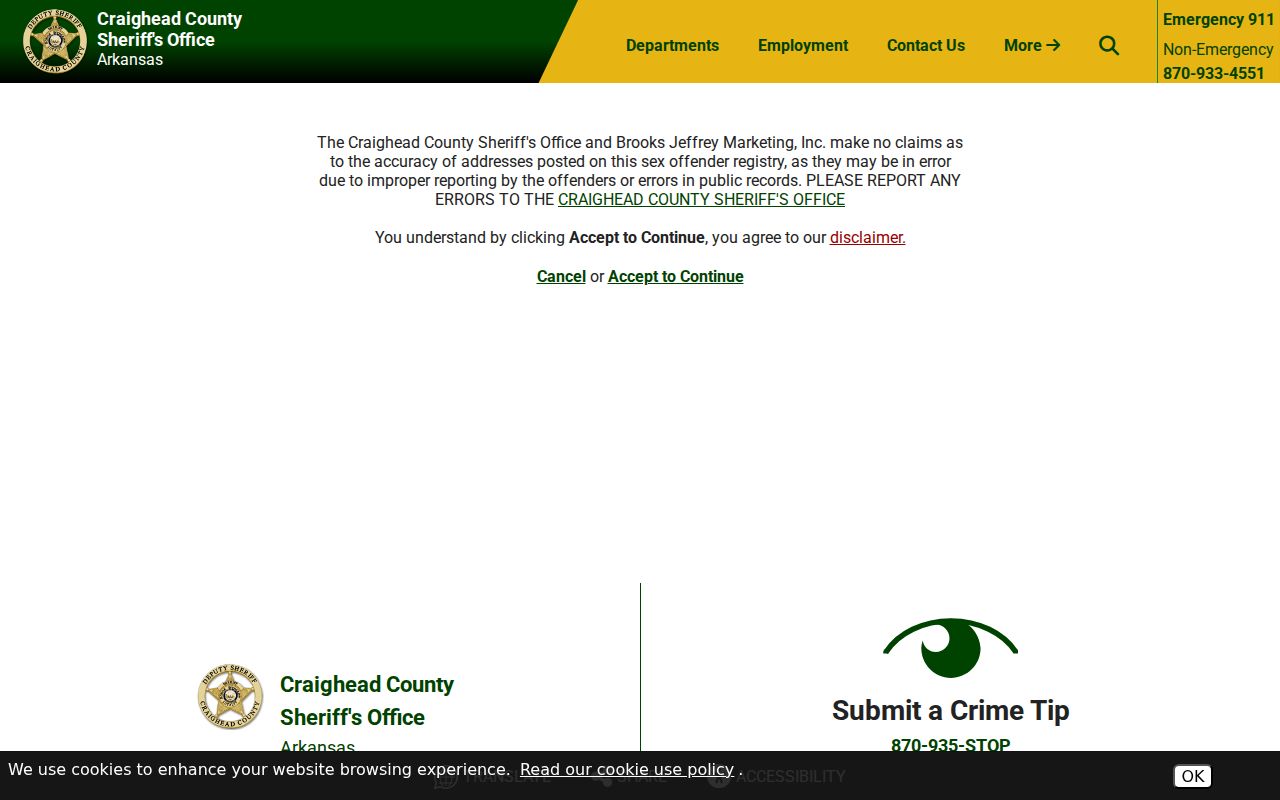
That warning is why the local list should be checked against state registry information.
Search ACIC Before Local Lists
ACIC is the registry manager, so a Craighead County sex offender registry search should not stop at the sheriff page. The sheriff list points users toward state and national registries, which is a strong local signal that the county page is supplemental. Start with ACIC, then compare the sheriff list if local reporting or address-correction details matter.
The Arkansas.gov registry service page says searchers can search by address, city, county, ZIP, or name and view publishable offenders around the map view or location entered. That makes the state registry better for a neighborhood or city search than a single static local page.
The Arkansas Sex Offender Registry search page is the official statewide search layer for Craighead County registry checks.
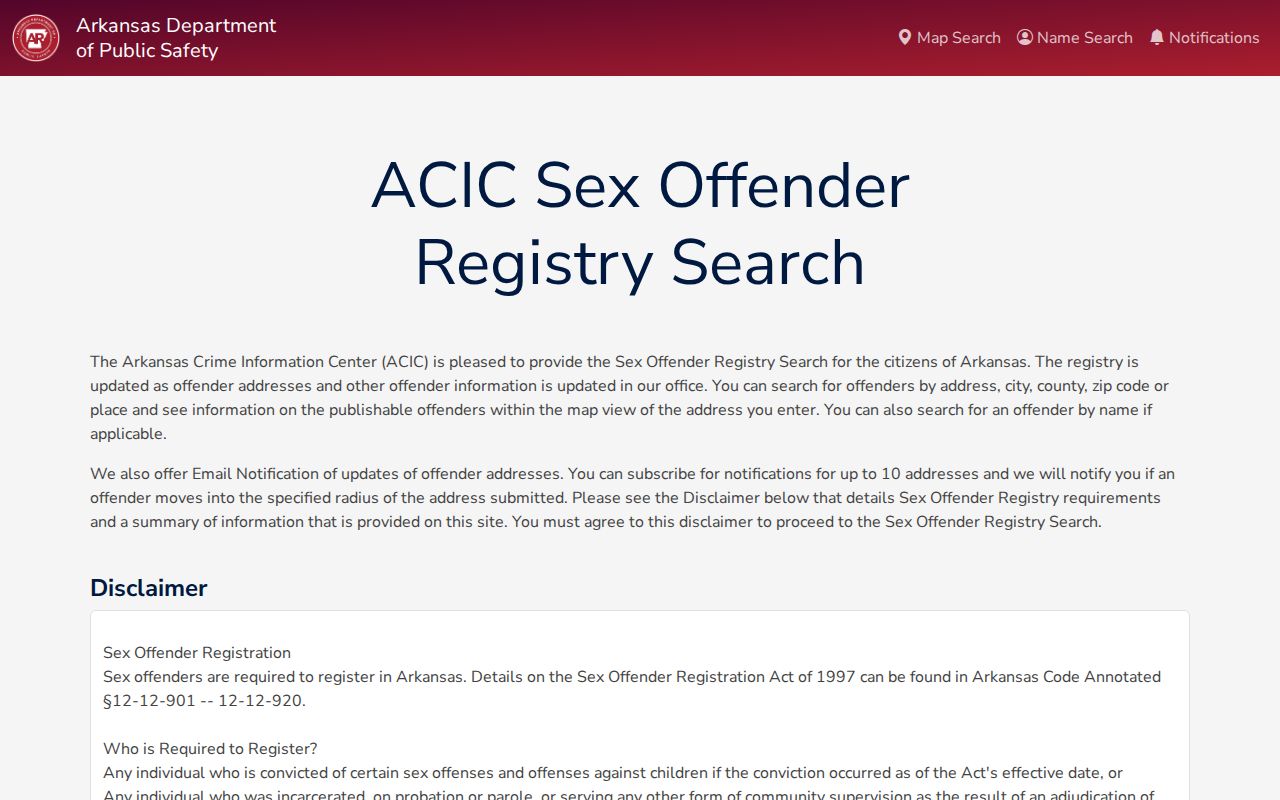
State registry searching gives readers city, county, ZIP, address, and name options that a local list cannot fully replace.
Searching the Arkansas Sex Offender Registry
The state registry works best when the search starts broad and then narrows. Use a county or city search for local awareness, an address or ZIP search for proximity, and a name search when the person is already known. If the result affects a safety decision, confirm the information through the registry and the sheriff's registration office before relying on it.
- Open the Arkansas Sex Offender Registry and review the conditions of use.
- Search by Craighead County, city, ZIP code, address, place, or name.
- Review the map or result list and match the correct profile without assuming every similar name is the same person.
- Open the profile and read the registration, address, level, status, and agency fields.
- Use the sheriff or ACIC contact route to report suspected address errors or compliance concerns.
| Field Label | Type | Required | Notes |
|---|---|---|---|
| Address | Text/geocoder | No | Used for map or proximity searching. |
| City | Text or dropdown | No | Useful for Jonesboro, Brookland, Bono, and Lake City searches. |
| County | Dropdown/search | No | Choose Craighead for countywide results. |
| ZIP code | Text | No | Useful when a city crosses practical neighborhood boundaries. |
| Place | Text/geocoder | No | Arkansas.gov describes place searching. |
| Name | Text | No | Use when checking a known person. |
Craighead Sheriff List Is Not Complete
The Craighead County sheriff sex offender disclaimer is unusually direct. It says the sex offender list on the sheriff website is not a complete list of offenders required to register with the sheriff. That warning should change the search method: use the sheriff list as a county layer, not as the only registry check.
The sheriff's list page also warns that addresses may be wrong due to improper reporting by offenders. If an address appears wrong, the better response is to report the concern to the Sheriff's Office and check the ACIC registry, not to confront anyone or spread unverified claims.
The Craighead County sheriff local sex offender list is the county-level page that carries the address-error warning.
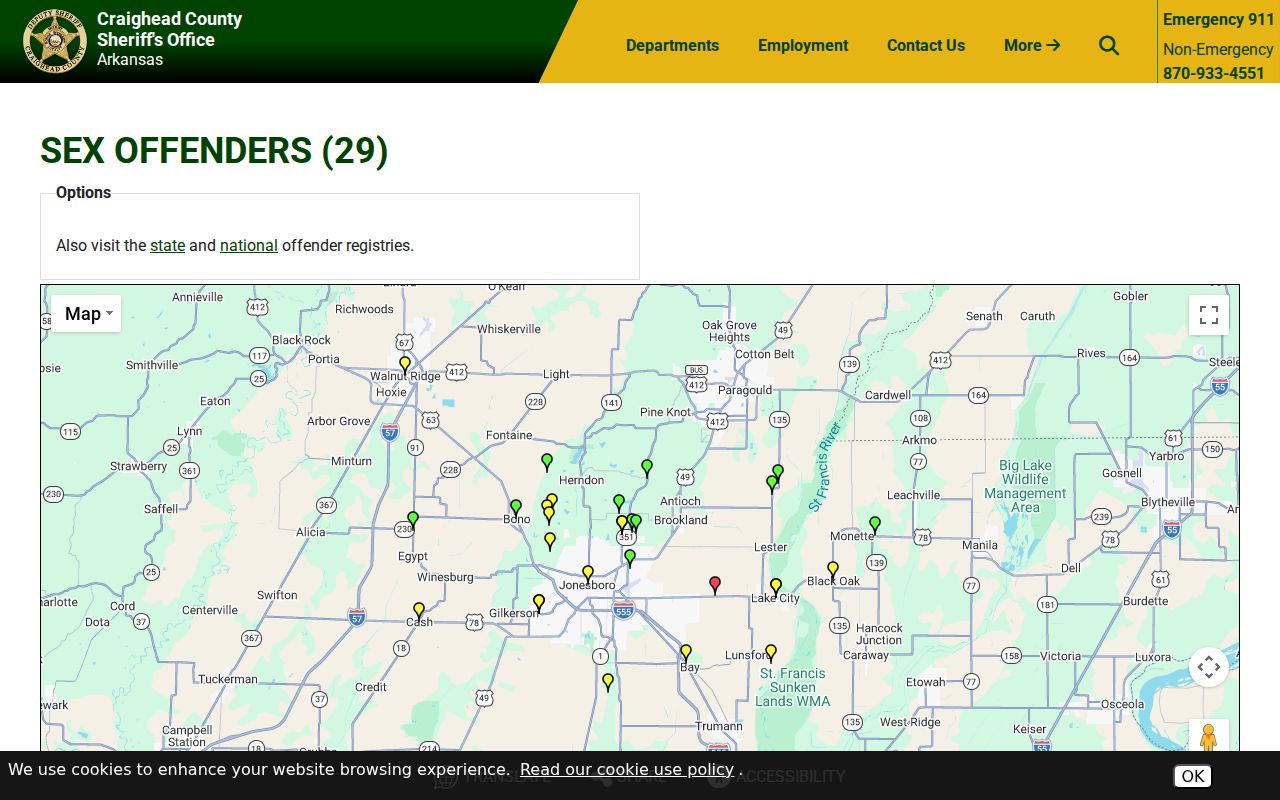
Its local context is useful, but the warning itself tells readers to verify through broader official registry channels.
What a Registry Profile Shows
Registry profiles are built for public notification. They usually combine identity, location, offense, and compliance details, but the exact fields can vary by public-access rules and registry data. No profile should be treated as a court file or as a full criminal history.
| Name and Aliases | Identifying names published by the registry. |
|---|---|
| Photo and Description | Photograph, physical description, and visible identifiers when published. |
| Registered Address | Address or mapped location subject to registry caveats and offender reporting accuracy. |
| Offense Information | Conviction or offense fields and jurisdiction details where public. |
| Notification Level | Arkansas community notification level or risk-related classification when shown. |
| Status and Agency | Compliance or contact details and the agency responsible for registration follow-up. |
Craighead County Address Errors
Address accuracy is a county-specific caution. The sheriff's local list says addresses posted by the sheriff may be in error due to improper reporting by offenders. That does not mean readers should ignore registry information. It means the state registry, local sheriff list, and official report-error process should be used together.
For safety planning, search the address or ZIP in ACIC, review the local sheriff list, and use NSOPW when a person may have moved across state lines. If a profile looks stale or mismatched, call the sheriff rather than relying on a screenshot or copied entry.
Registration Requirements and Levels in Arkansas
Arkansas sex offender registration is governed by the Sex Offender Registration Act of 1997, Ark. Code Ann. 12-12-901 through 12-12-920. ACIC and DPS describe community notification levels, but the research did not locate a complete official duration table for every offense and level. Do not infer a registration term from level alone.
| Registry Topic | What It Means | Public Caution |
|---|---|---|
| Registration duty | Covered offenders must register under Arkansas law. | Specific duty details depend on statute and case facts. |
| Community notification level | Risk or notification category used for public safety notice. | Level is not the same thing as a new conviction. |
| Published address | Reported residence or mapped location. | The sheriff warns local addresses can be wrong. |
| Duration | How long registration continues. | Confirm through the statute, ACIC, or court record. |
NSOPW for Cross-State Checks
The National Sex Offender Public Website is the cross-state layer. It can help when a person may have lived outside Arkansas, when an address sits near state lines during a broader search, or when community awareness requires checking multiple jurisdictions.
NSOPW does not replace ACIC for Arkansas records. It is a national search route that links public registry information across states, territories, and Indian Country. For Craighead County questions, return to ACIC and the Sheriff's Office for local registration and report-error follow-up.
Lawful Use and Community Notification
Registry information is for public safety, family awareness, and community notification. It is not a license to threaten, harass, intimidate, or interfere with a person listed in the registry. It also should not be copied into unofficial lists that can go stale or misstate an address.
Misusing Arkansas sex offender registry information can create legal risk. Do not harass, threaten, intimidate, or take vigilante action based on a registry listing.
Craighead Registration Office Contacts
Craighead County registration and report-error questions route through the sheriff offices. The Western District office is at 901 Willett Road, Jonesboro, AR 72401, phone 870-933-4551. The Eastern District office is at 107 Cobean Boulevard, Lake City, AR 72437, phone 870-237-4511.
State-level registry issues can also route to ACIC. The research identifies ACIC Registry Manager Paula Stitz at 501-682-2222 and ACIC, 322 South Main Street, Suite 615, Little Rock, AR 72201. Use the official channels to correct or verify data rather than relying on unofficial copies.